Project objective: Raise awareness and provide assistance to local farmers who may face the risk of losing their livelihoods due to land-related challenges in the future.
Do you know the water behind your frozen seafood?
During the research phase, I divided the study into two parts: site analysis and social analysis. Rayong, a province in Thailand, has many industries and farms near two main rivers - Rayong and Prasae. Most shrimp farms are along the Prasae River since the water is better for shrimp farming. CP Farm, at the river's mouth, receives water first - creating a hierarchy that leaves local farmers at a disadvantage.
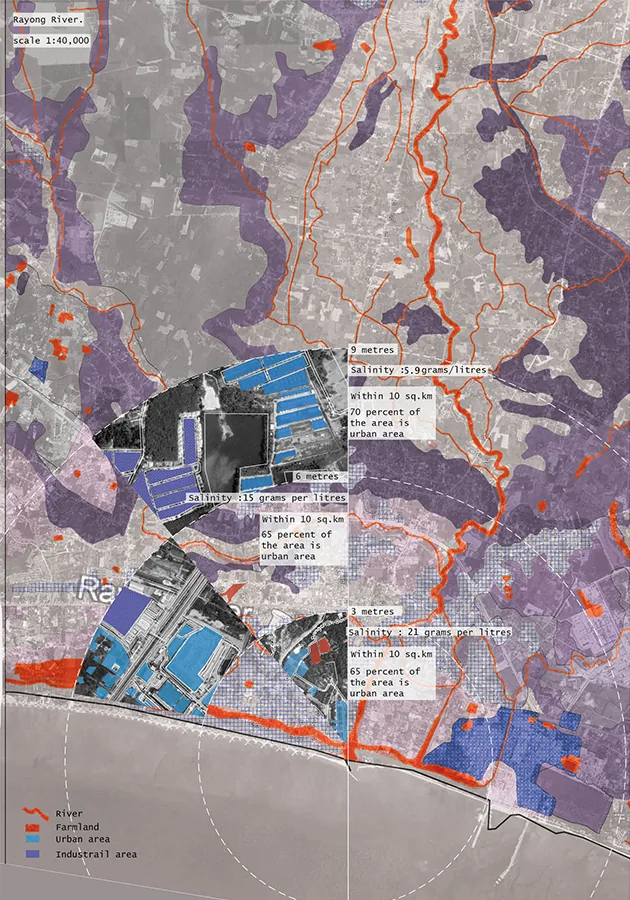
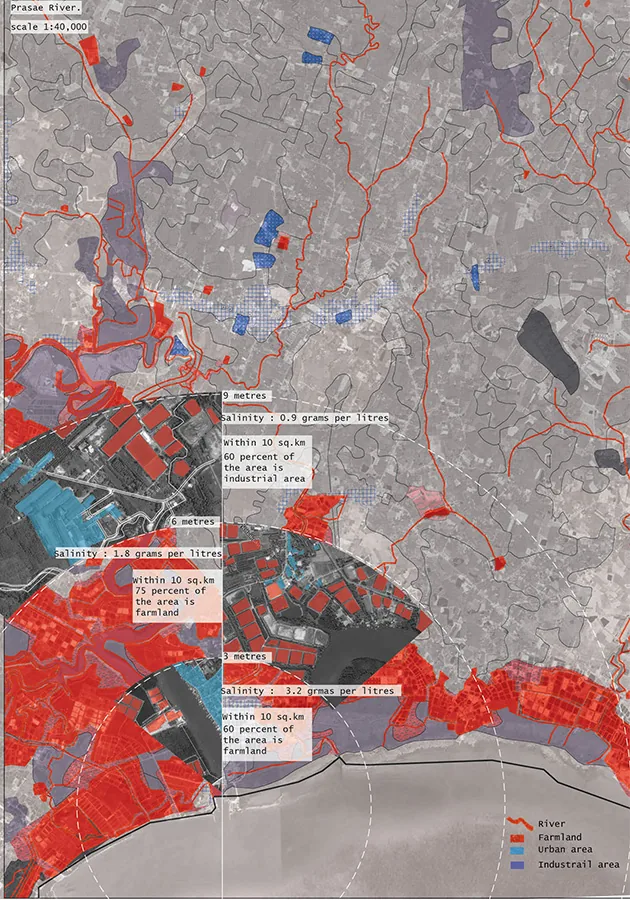
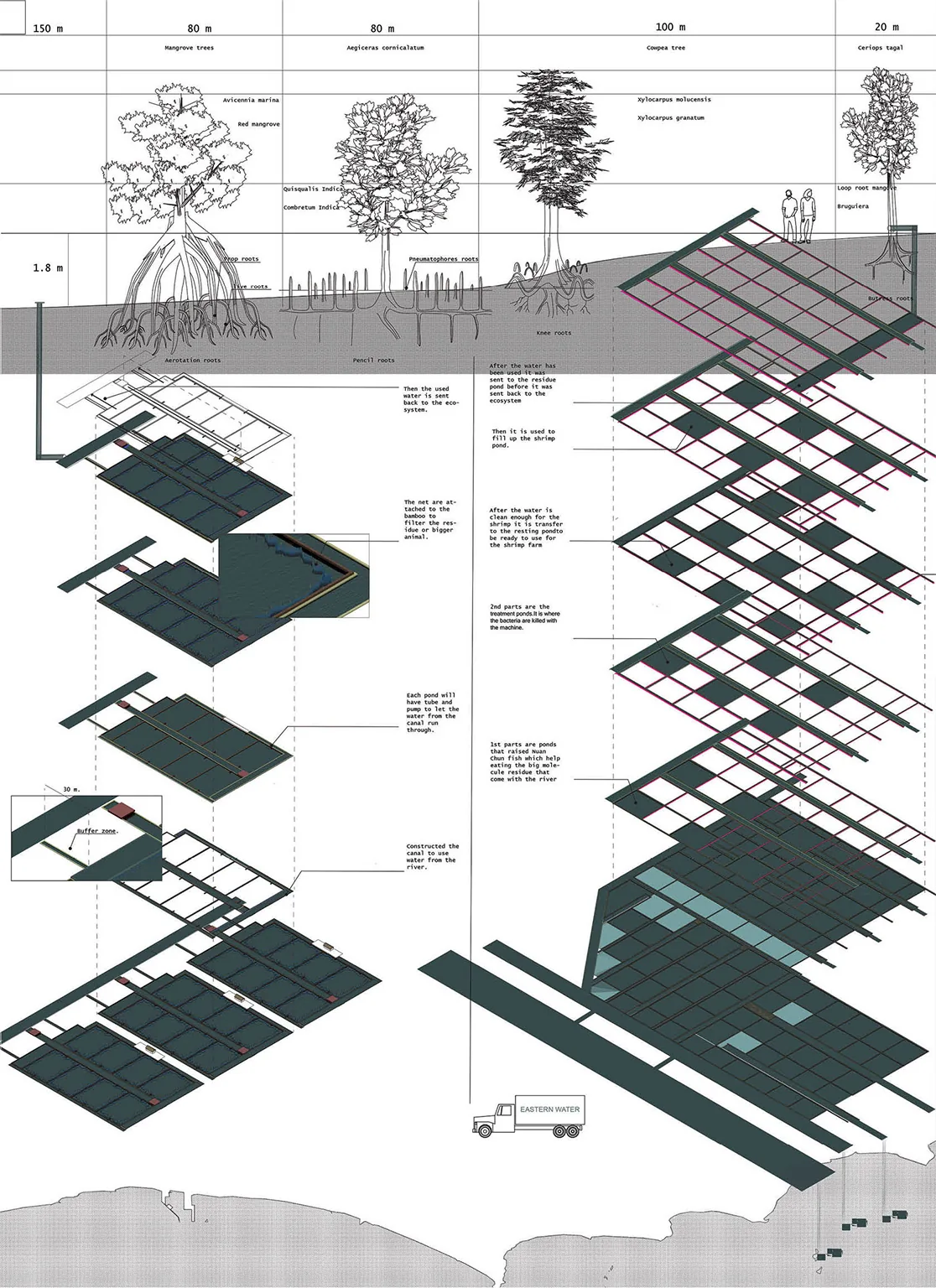
Macro farms deploy advanced filtration systems, treating water both before intake and after discharge. Micro farms have no such infrastructure. They rely on nets and mangrove roots for natural filtration, with no pre-treatment before releasing water back. CP Farm, positioned at the river's mouth, captures the cleanest supply first. Everyone else works with what's left.
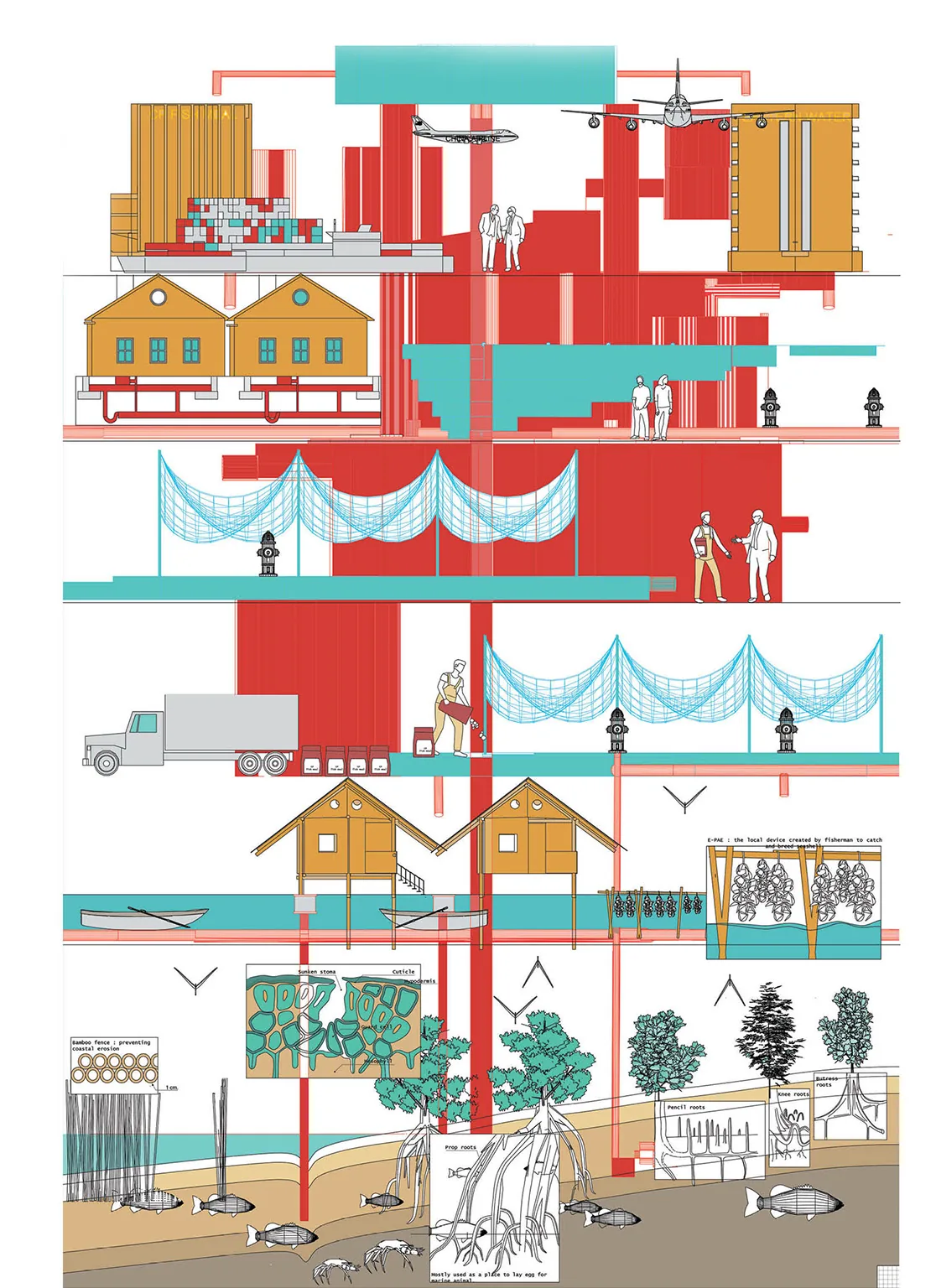
Pain points identified from research and local interviews:
Environmental
Reduction of fresh water in Rayong. Mangrove reduction due to land clearing by large operators.
Social & Economic
Locals lack water efficiency knowledge. Corporate intervention in the seafood industry. Farmland reduction as large operators expand.
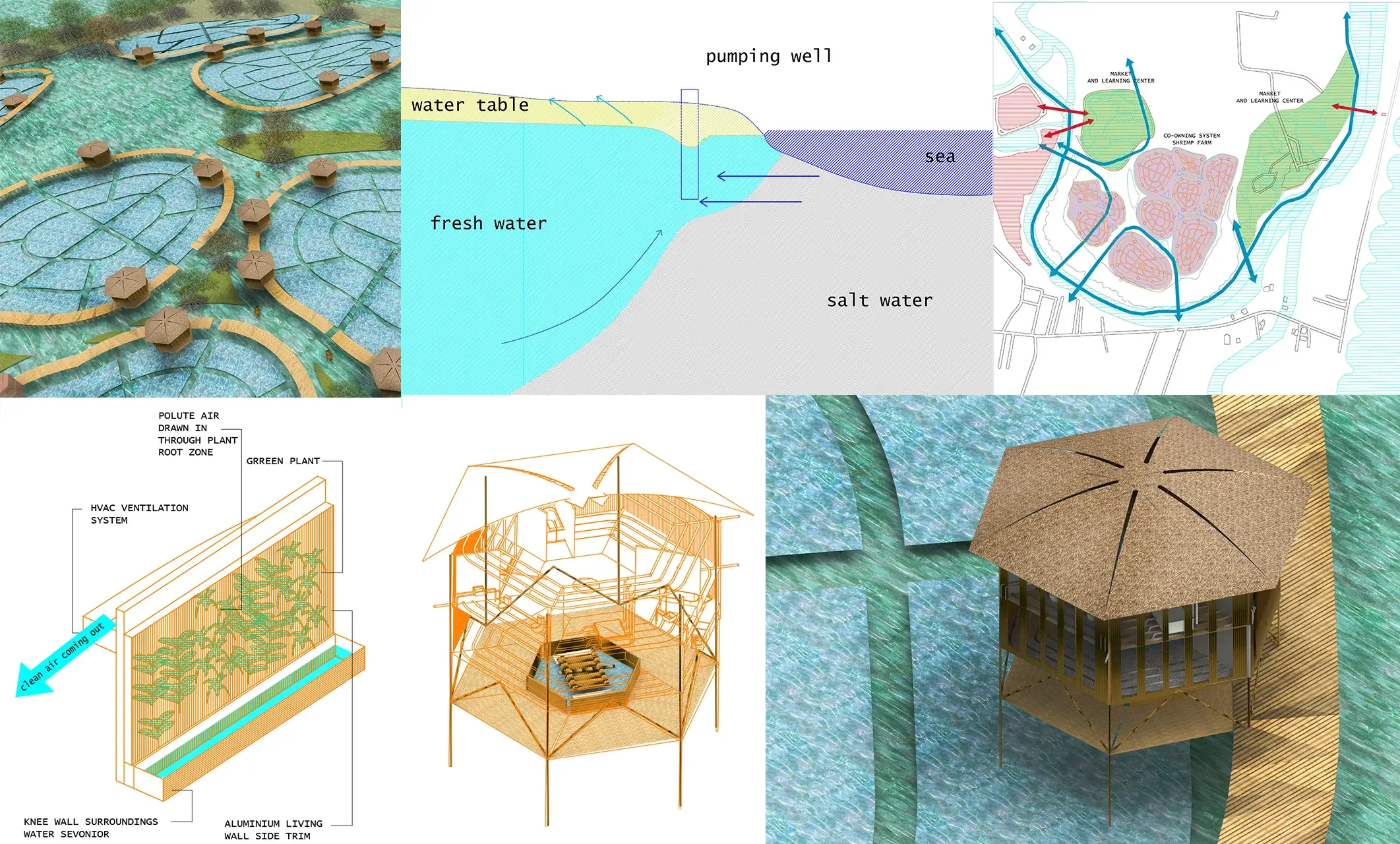
During the ideation phase, I sketched out various design ideas, water circulation within houses, incorporating living walls, modular house planning, and well pumping systems. The goal was to find solutions that work at community scale without expensive technology.
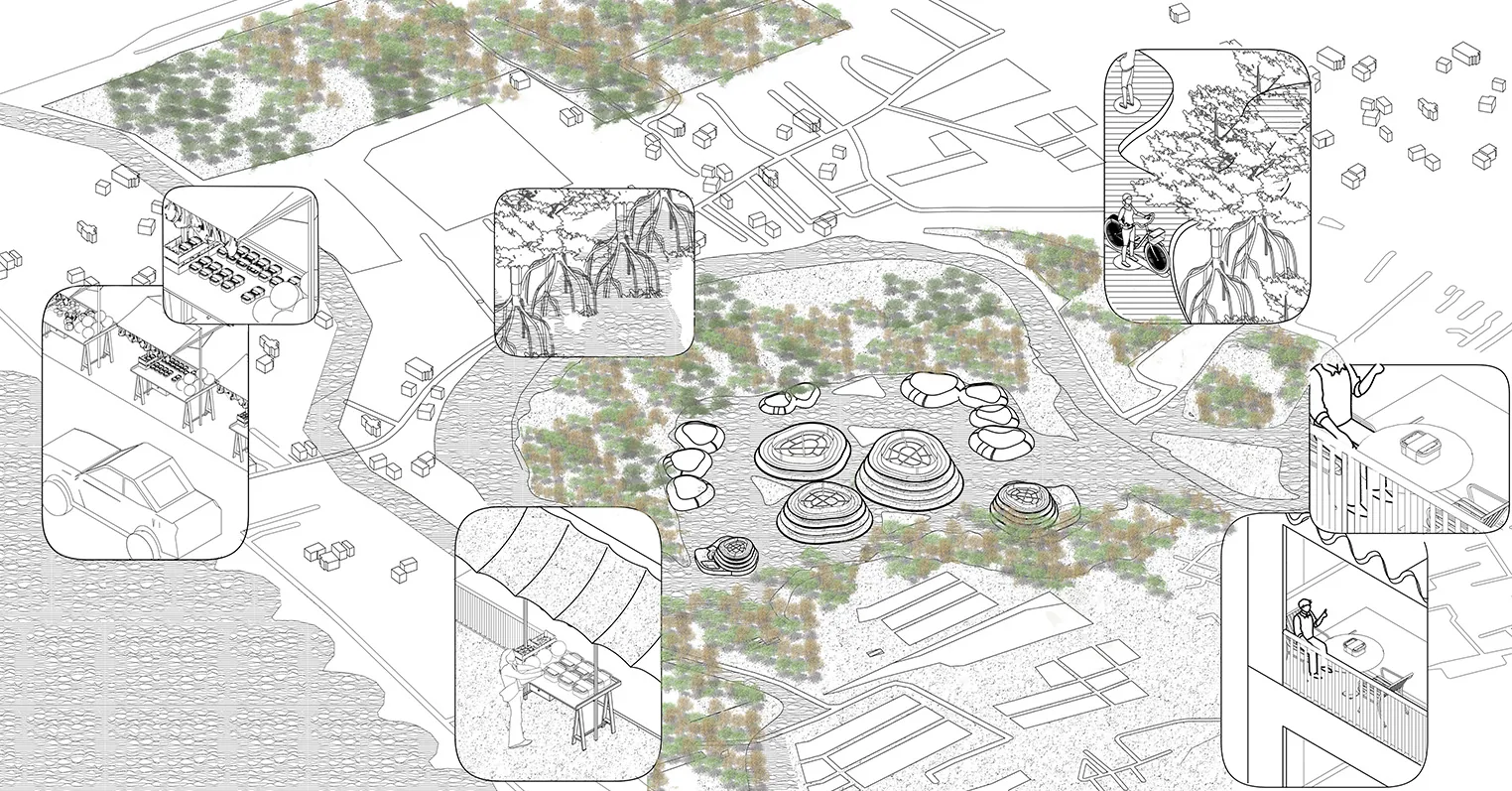
Mapping water bodies and selecting Rayong River as the primary focus area, closely linked to the community, near Mabtaput Port, adjacent to a mangrove conservation area.
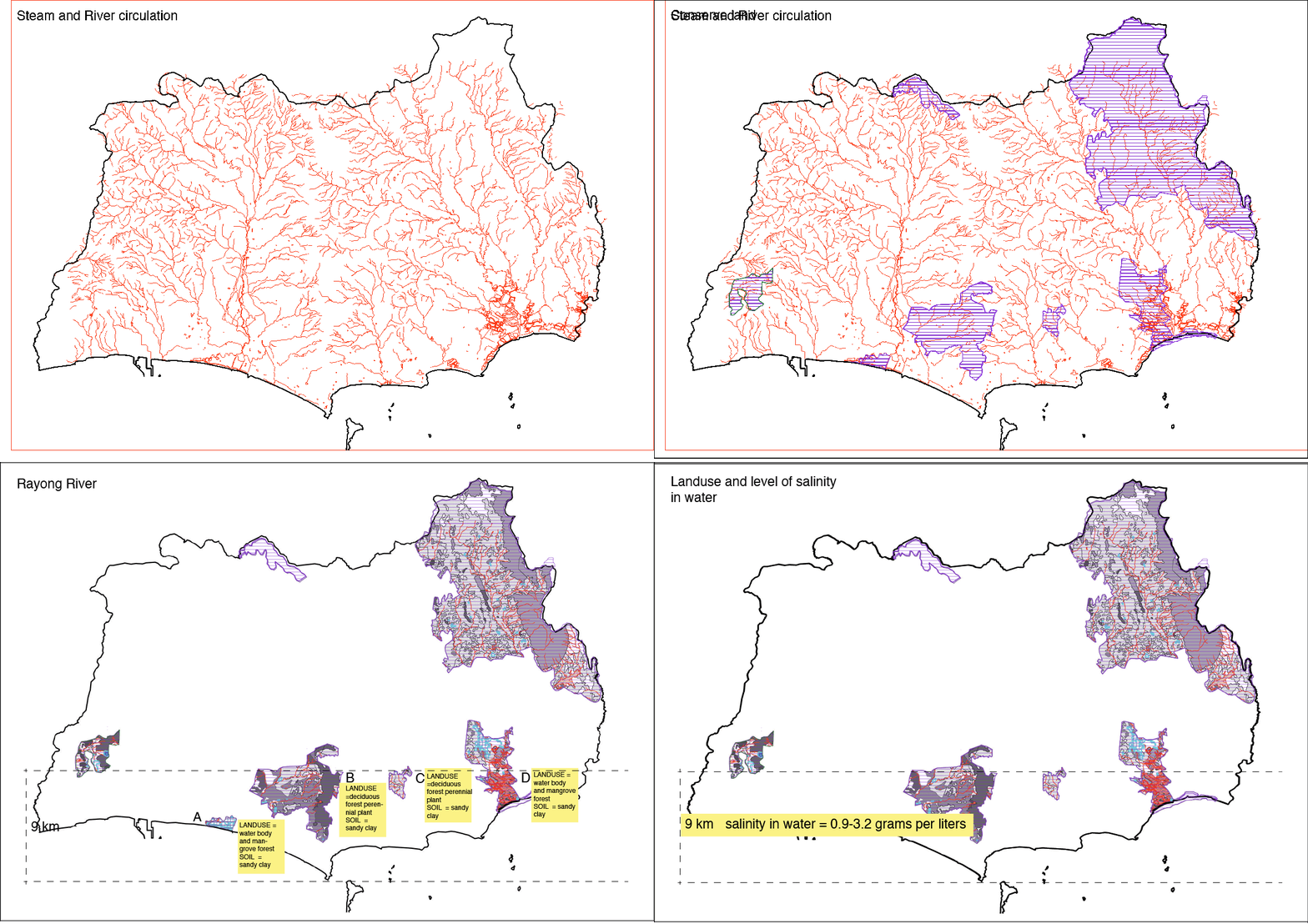
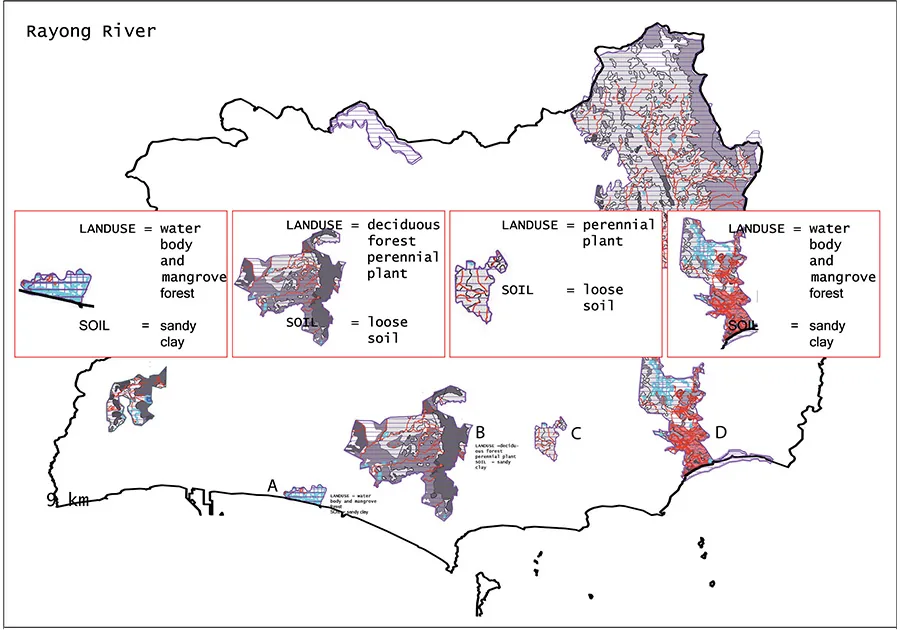
Site Selection
I opted for the Rayong River as it's closely linked to the community and conveniently situated near Mabtaput Port. During site analysis, I observed nearby assets like the mangrove conservation area and Prachedi Glangnu public park, which are popular gathering spots. I planned to incorporate these spaces into our community while preserving the mangroves.
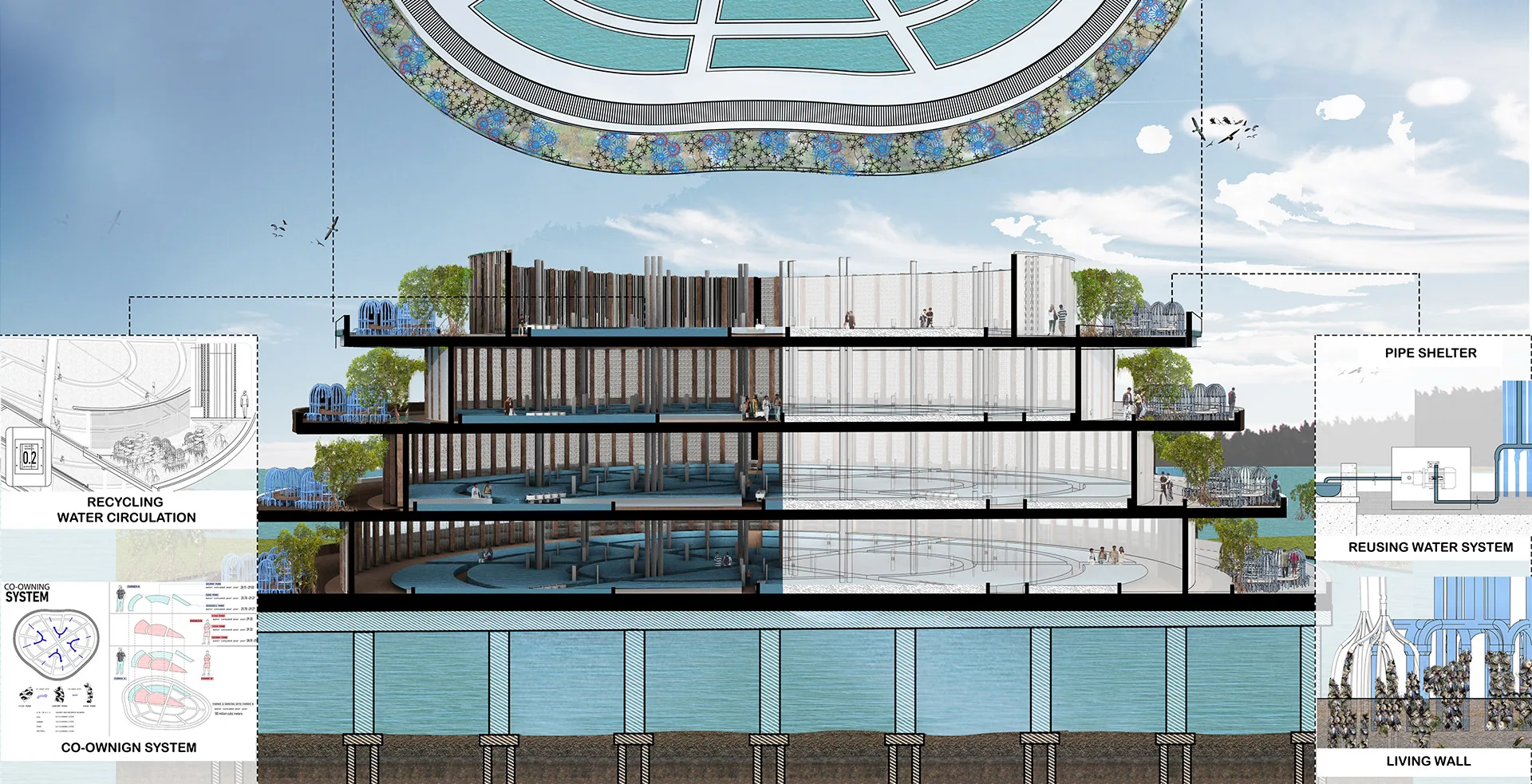
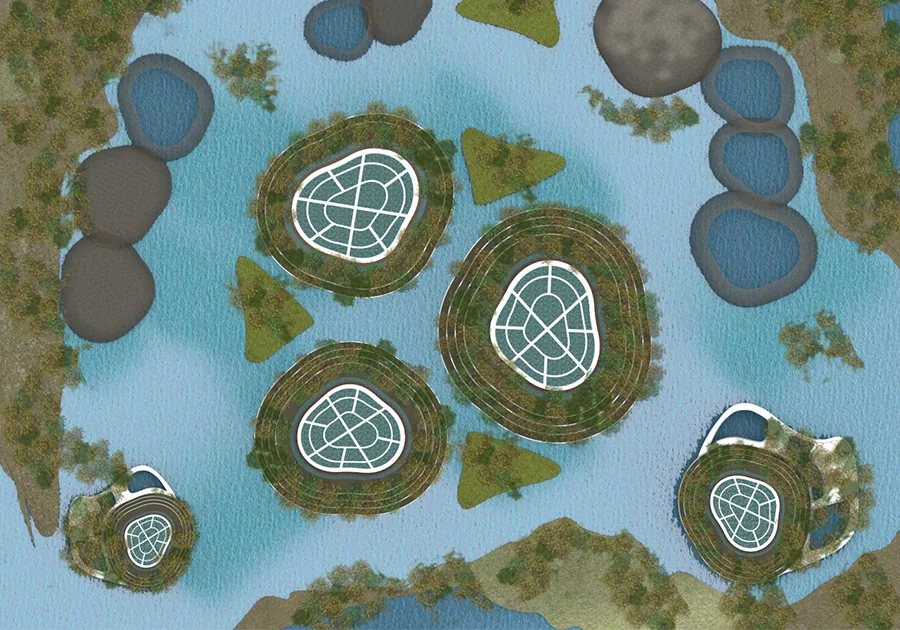
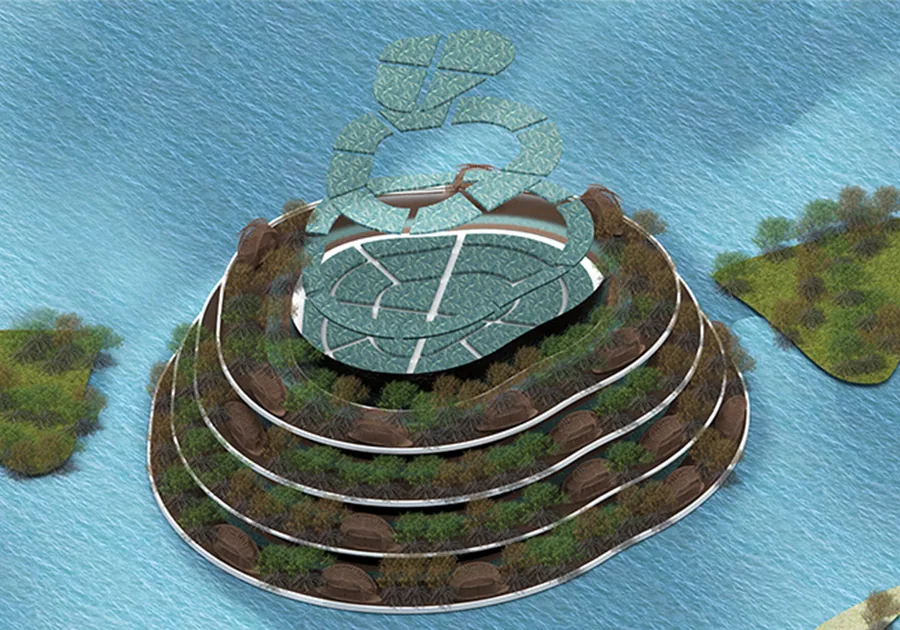
Three interconnected systems designed to work together: vertical farming, mangrove filtration, and a port-based learning center.
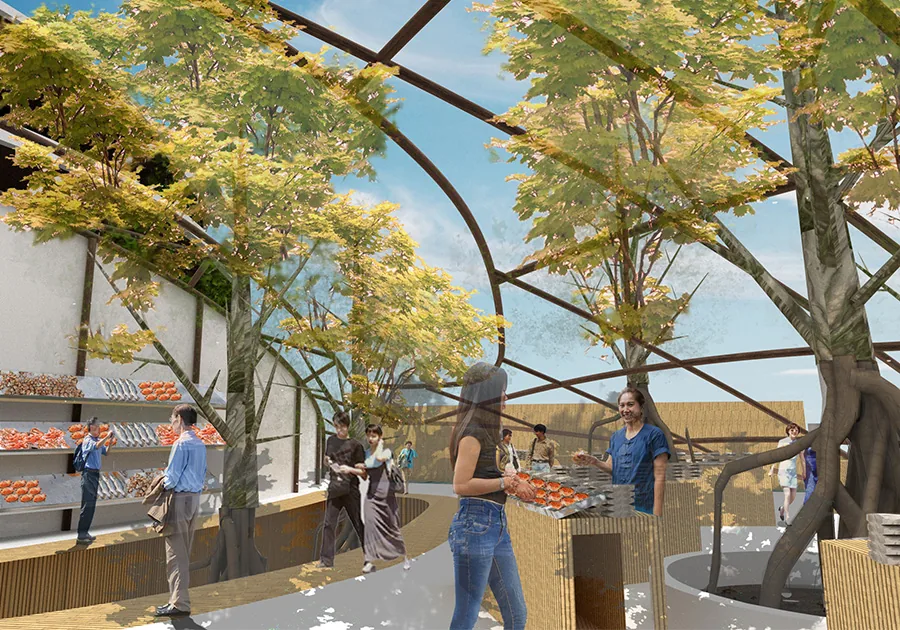
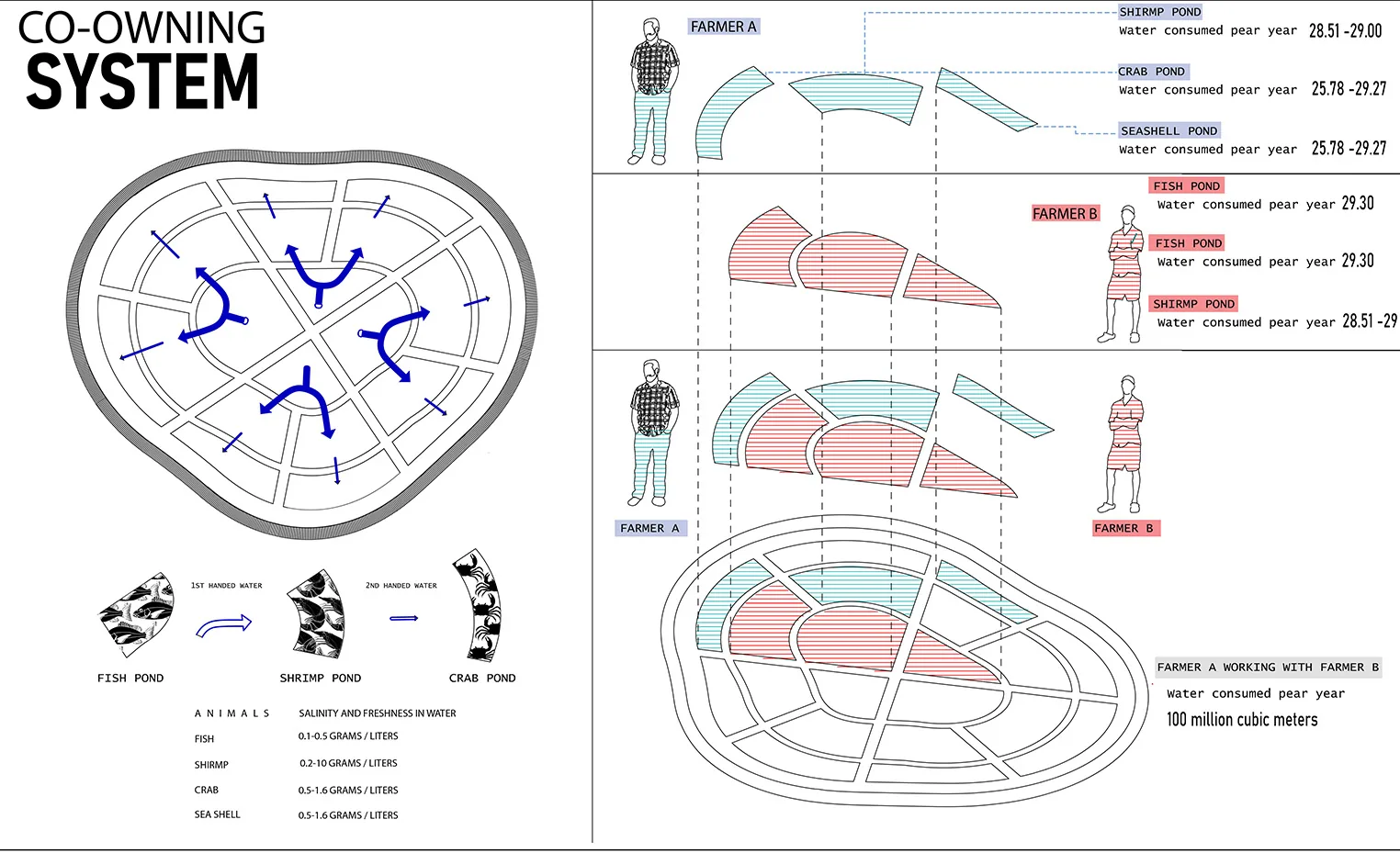
Ponds arranged by freshwater needs, fish at core, shrimp in middle, crab and sea shell on the outer ring, enabling water reuse from inner to outer ponds. The co-owning system increases income while reducing water consumption.
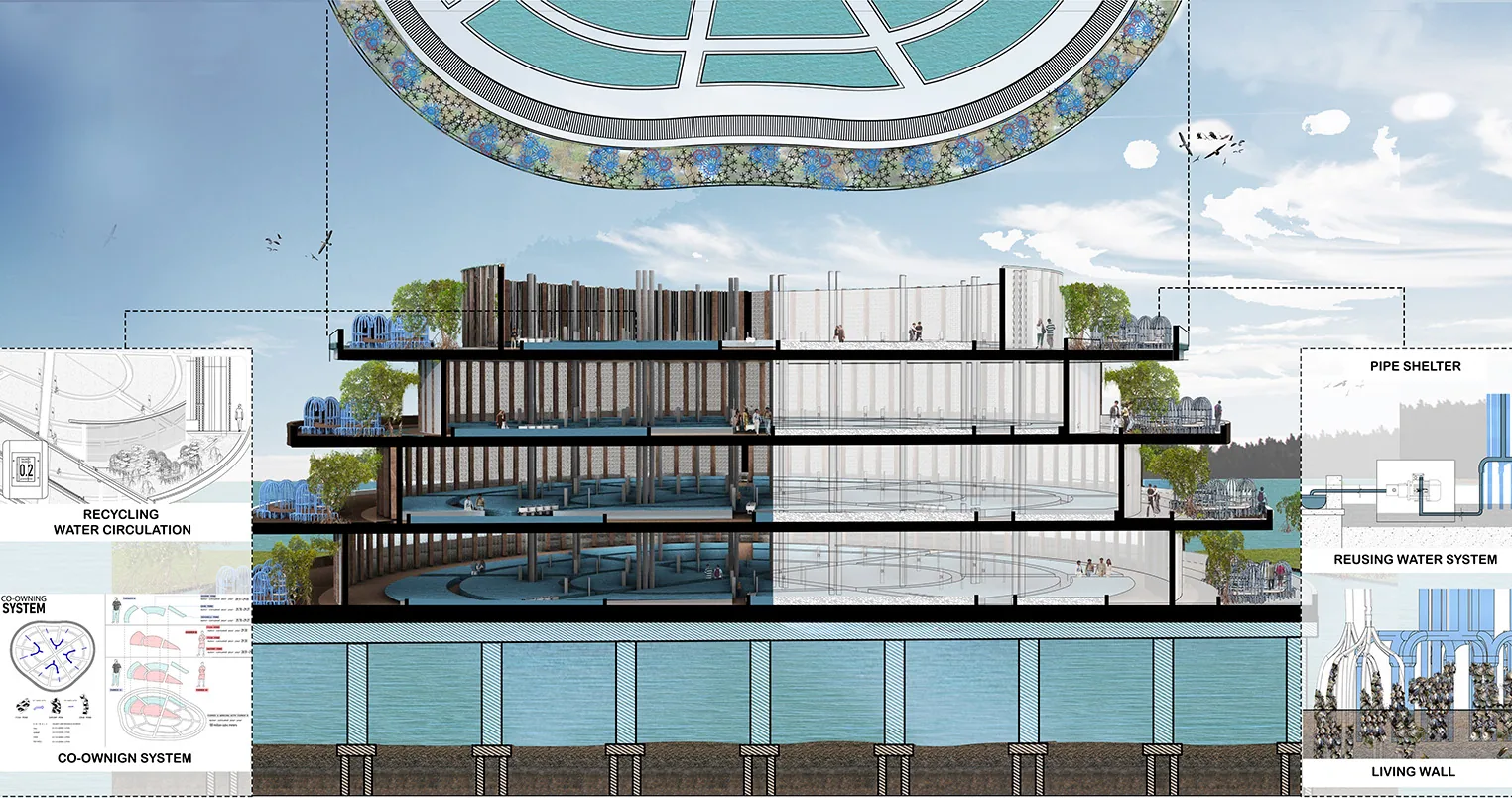
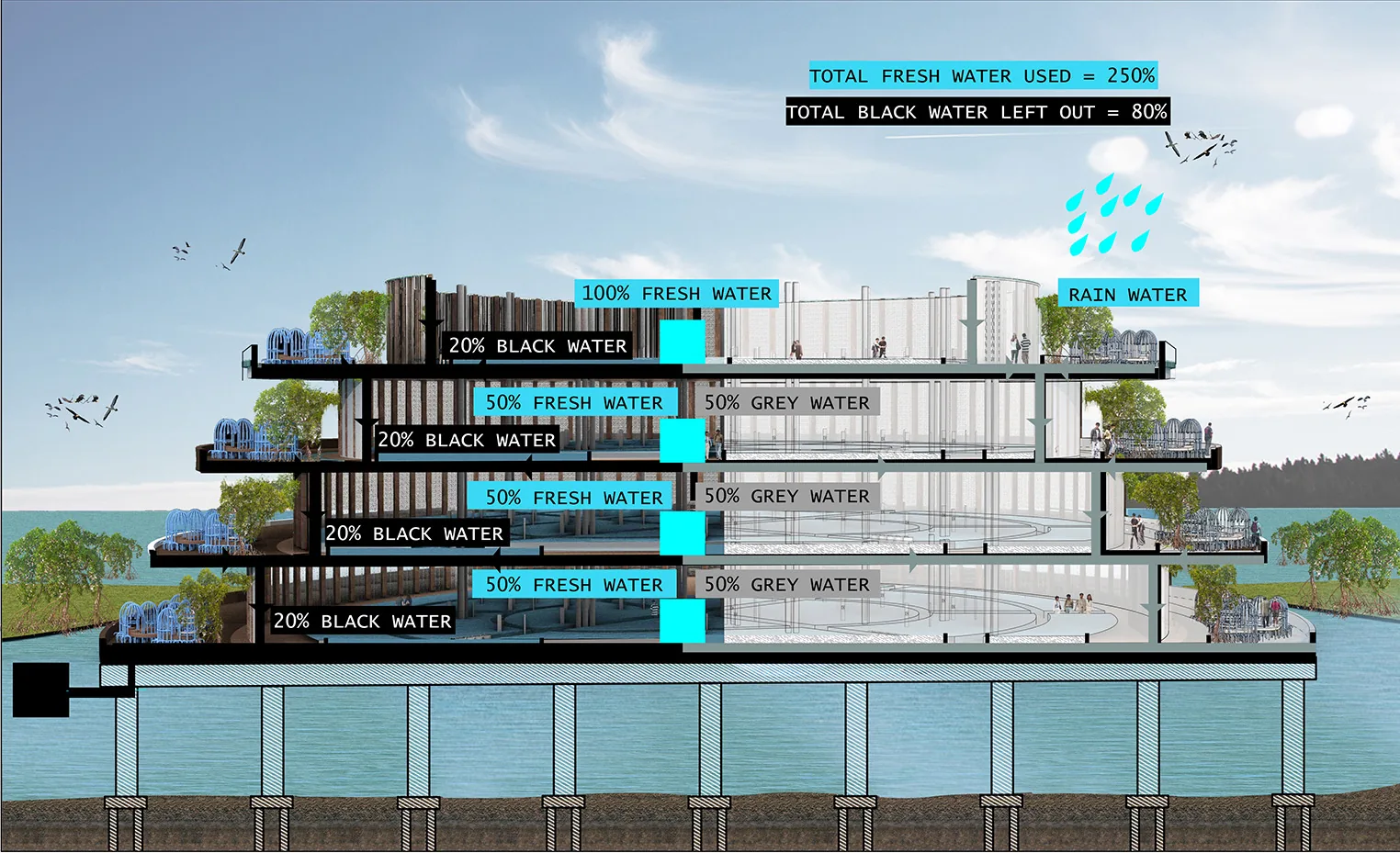
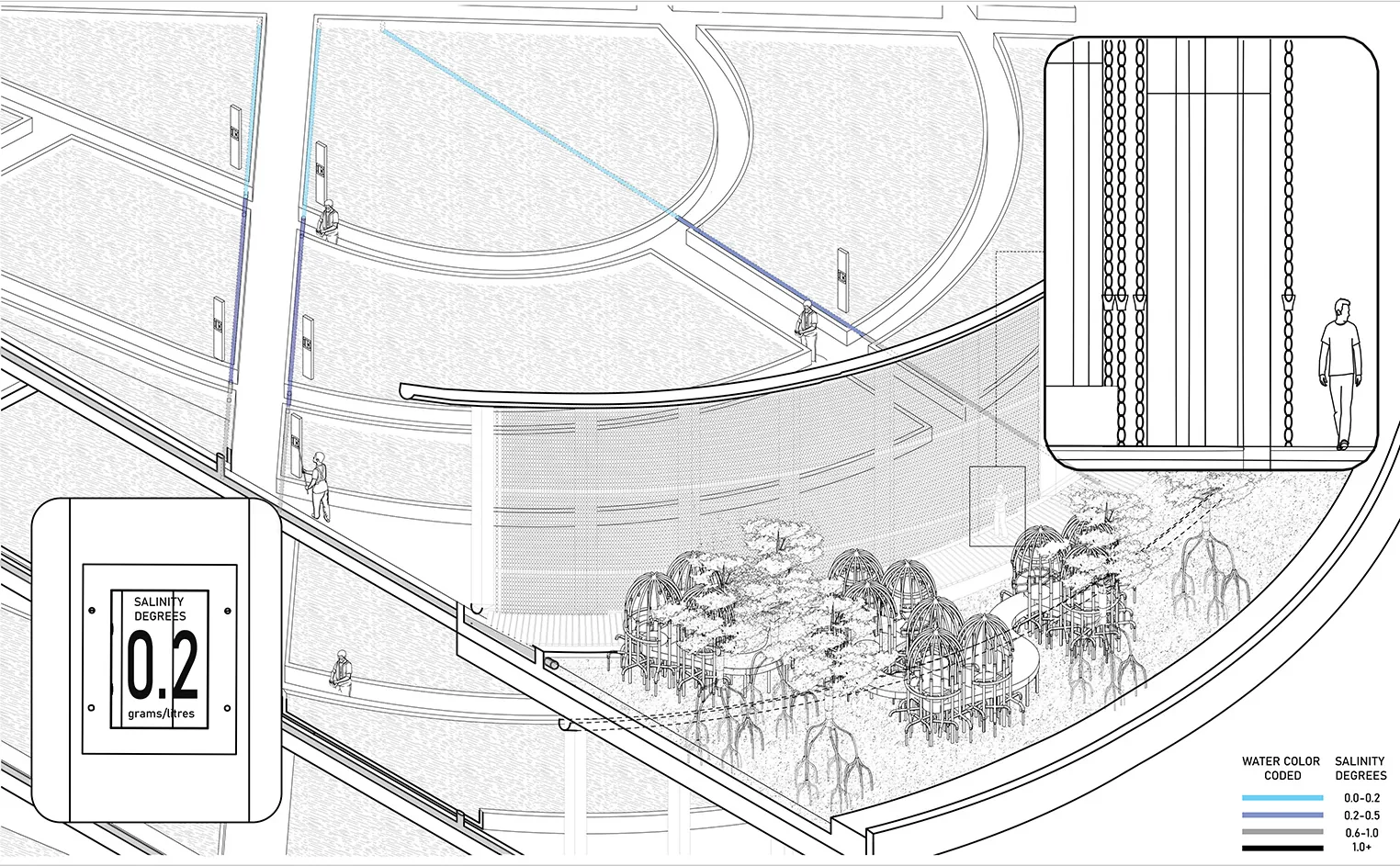
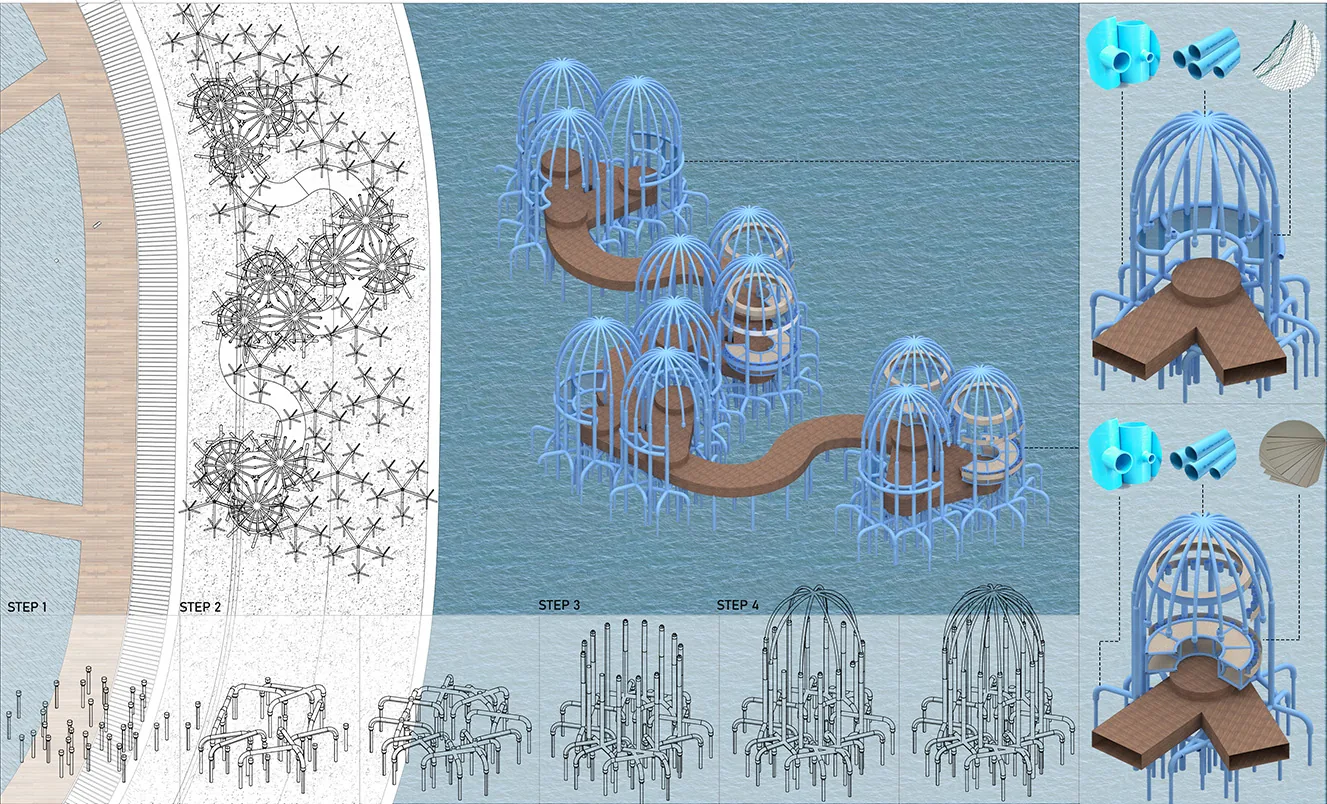
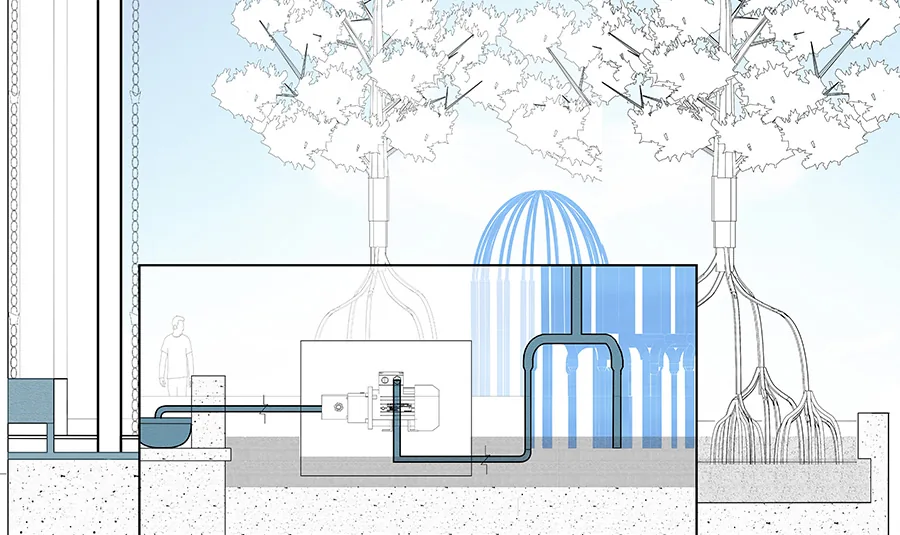
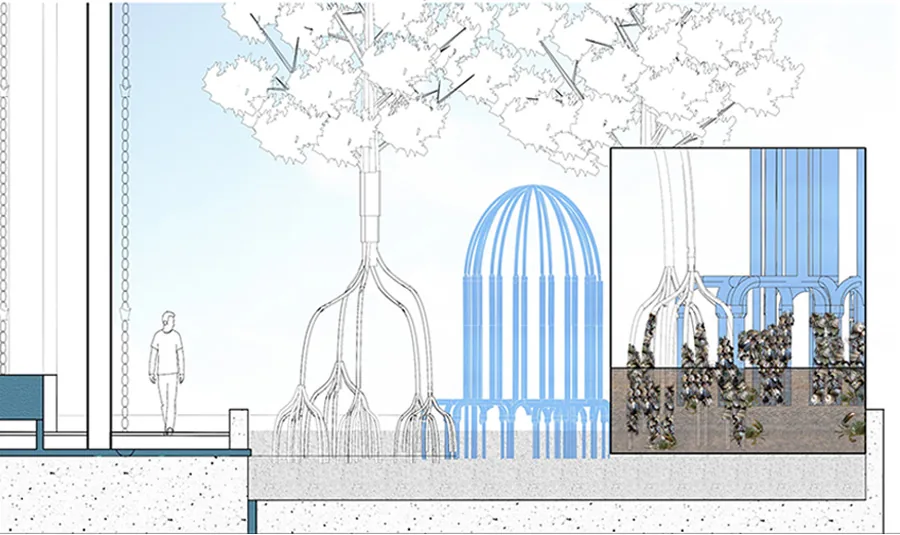
Using mangrove roots as a natural filter, paired with a sheltered pipe system for water release.
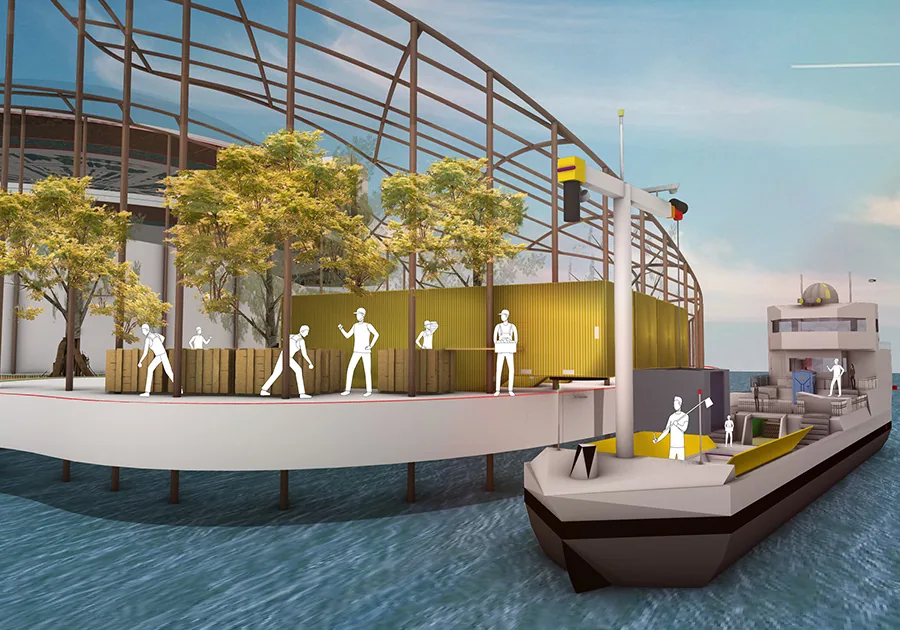
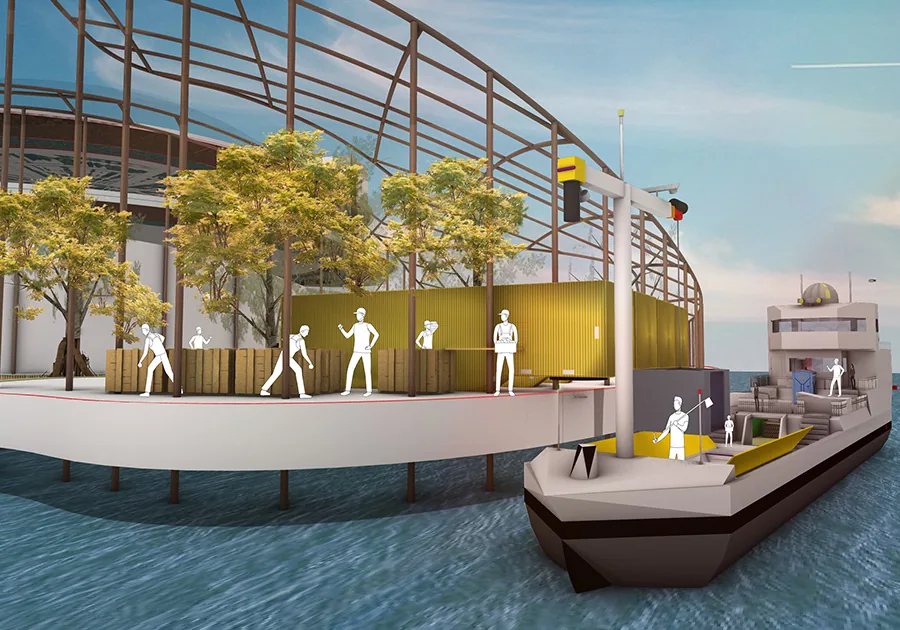
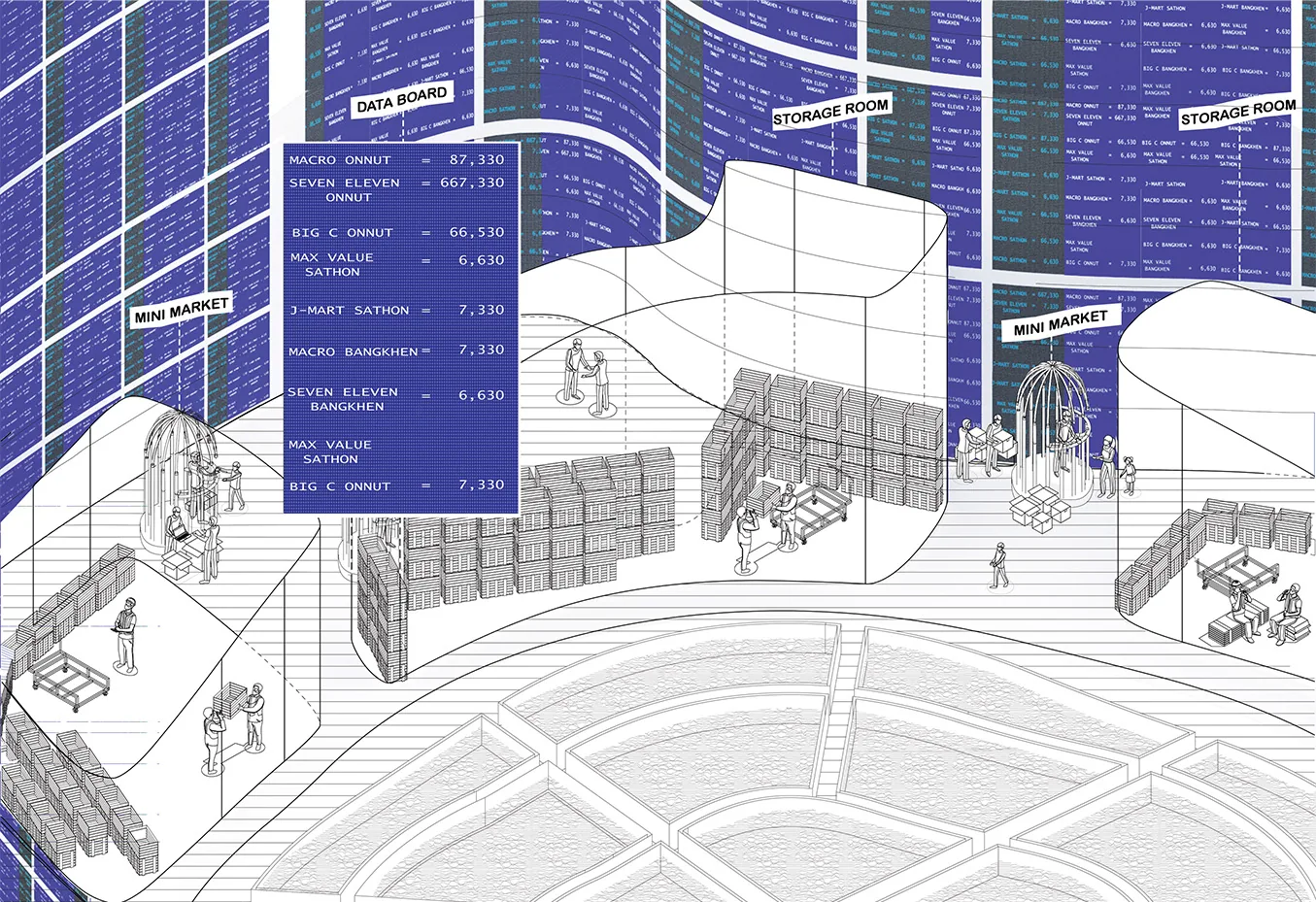
A central hub that provides data feedback and education to farmers, helping them optimize water usage and compete on quality rather than scale.
These communities offer local farmers a chance to break free from hierarchical systems. Partnerships with organisations like WWF could expand the Rayong community while benefiting mangrove ecosystems across Thailand, proving that sustainable seafood production, water ecology, and mangrove ecosystems can coexist harmoniously.